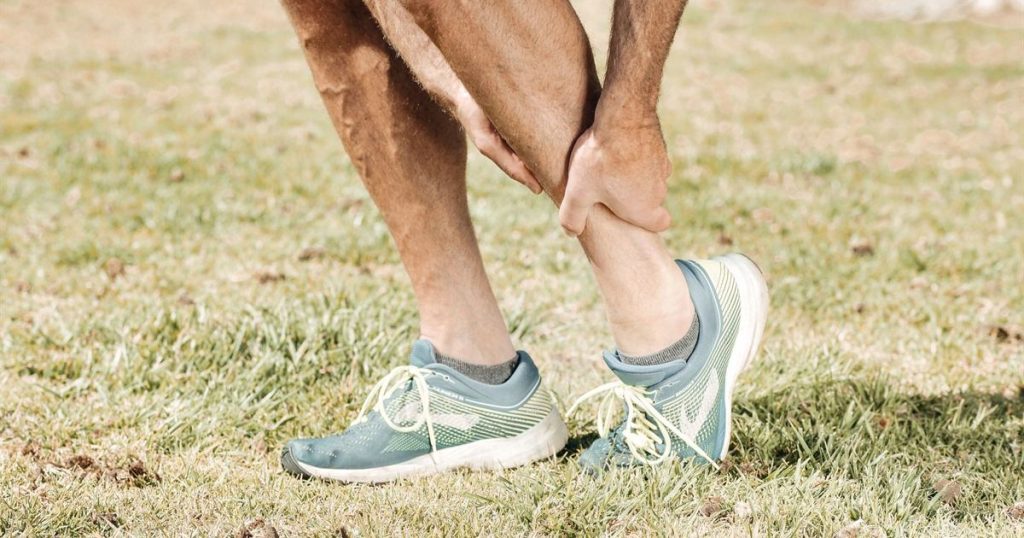
Tendons do not heal like muscle. That single fact explains why yours has not improved in eight months.
Table of Contents
- Why Tendons Heal Badly
- Shock Wave Therapy for Achilles Tendinopathy
- Calcific Tendinitis of the Shoulder
- Tennis Elbow and Golfer’s Elbow
- Shin Splints and Gluteal Tendinopathy
- Why Loading Matters More Than Rest
- FAQs About Shock Wave Therapy for Achilles Tendinopathy
You rested it for six weeks. It felt better. You went back to running and it hurt again within two sessions.
That pattern is the signature of a tendon problem, and it is why the standard advice keeps failing.
Rest reduces the load causing pain without changing the tendon’s capacity to handle load. Shock wave therapy for Achilles tendinopathy targets the tendon itself, restarting a repair process that stalled. This guide covers how that works, which tendon problems respond, and why treatment without loading exercise usually fails.
Why Tendons Heal Badly
Tendons have a poor blood supply compared with muscle. Less blood means slower delivery of everything repair requires.
The naming matters here. Tendinitis implies inflammation. Long-standing tendon problems usually show degeneration rather than active inflammation, which is why the term tendinopathy is now preferred and why anti-inflammatory treatment stops helping after the early weeks.
Degenerated tendon has disorganized collagen fibers and abnormal blood vessel growth. It is not inflamed. It is structurally altered and stuck.
That is the situation shockwave targets. Deliberate mechanical stress provokes a fresh healing response in tissue that stopped mounting one.
Rest does not restart the process. It removes the irritation when the underlying tissue stays exactly as it was.
Shock Wave Therapy for Achilles Tendinopathy
The Achilles is the largest tendon in the body and among the most commonly affected.
Two presentations exist and they respond differently.
Mid-portion tendinopathy affects the tendon a few centimeters above the heel bone. It usually responds better to treatment.
Insertional tendinopathy affects where the tendon attaches to the heel. It is more stubborn, and treatment protocols differ.
Extracorporeal shock wave therapy for Achilles tendonitis is usually applied where the tendon is thickened and tender, identified by palpation during the examination.
Classic symptoms include morning stiffness in the tendon, pain that eases during activity then worsens afterward, and tenderness when squeezing the tendon between finger and thumb.
That morning stiffness pattern is a useful marker of progress. It usually improves before pain during activity does.
Calcific Tendinitis of the Shoulder
Calcific tendinitis involves calcium deposits forming within the rotator cuff tendons, producing severe and sometimes sudden shoulder pain.
Shockwave has one of its stronger evidence bases here. Research supports its use for reducing or clearing calcium deposits and improving symptoms, and it appears as a recognized conservative option before surgical intervention.
Shock wave therapy for calcific tendonitis of the shoulder usually uses higher energy than soft tissue applications, and focused shockwave is often preferred for deposits sitting deeper in the tendon.
Diagnosis requires imaging, since the deposits are what define the condition. Ultrasound or X-ray identifies them.
Pain in this condition can be severe and disproportionate to the shoulder’s appearance. That is characteristic rather than alarming.
Tennis Elbow and Golfer’s Elbow
Both are tendinopathies at the elbow, differing only in location.
Tennis elbow, lateral epicondylitis, affects the tendons on the outside of the elbow, the ones extending the wrist. Golfer’s elbow affects the inside, the wrist flexors.
Neither is usually caused by the sport it is named after. Most cases come from occupational repetitive use, and both are frequently seen in people who have never played either sport.
These respond reasonably to shockwave, particularly where the problem has persisted past three months and standard treatment has not resolved it.
Grip strength is the practical measure worth tracking. Pain lifting a kettle or turning a door handle usually improves before the tenderness does.
Shin Splints and Gluteal Tendinopathy
Shin splints, medial tibial stress syndrome, produce pain along the inside of the shin bone during and after running. Shockwave is used where the problem has resisted load management and gait changes.
Stress fracture must be ruled out first. Pain at a specific point on the bone rather than spread along it, or pain that persists at rest, needs imaging before any treatment.
Gluteal tendinopathy produces pain on the outside of the hip, often worse lying on that side at night. It is frequently misdiagnosed as hip bursitis, and the two commonly coexist.
Shock wave therapy for gluteal tendinopathy targets the tendon attachment at the outside of the hip. It responds well to shockwave combined with progressive hip strengthening.
Side-lying at night is the symptom people report most. Improvement there is usually the first sign of progress.
Why Loading Matters More Than Rest
This is the section that determines whether treatment holds.
Tendons adapt to load. Removing load entirely reduces their capacity further, so returning to activity at the previous level reproduces the problem.
Progressive loading exercise rebuilds tendon capacity. Research on tendinopathy consistently supports loading programs as a foundation of treatment, and the
National Institutes of Health hosts the published work through PubMed.
Shockwave and loading do different jobs. Shockwave restarts the biological repair response. Loading rebuilds the tissue’s tolerance for the demands you place on it.
Shockwave without loading tends to relieve symptoms temporarily. Loading without shockwave works for many people and more slowly in stubborn cases. Together they address both halves.
Expect a prescribed exercise program alongside treatment. A provider offering shockwave alone is delivering half the treatment.
FAQs About Shock Wave Therapy for Achilles Tendinopathy
How many shockwave sessions for Achilles tendinopathy? Most courses run 3 to 6 sessions about a week apart. Insertional Achilles problems often need more than mid-portion ones. Your provider should reassess partway through rather than committing to a fixed number before examining the tendon.
Can I keep running during treatment? Usually in a modified form. Complete rest reduces tendon capacity further, so most protocols keep some loading when reducing volume and impact. Your provider should give specific guidance based on your symptoms. Avoid high-impact activity for about 48 hours after each session.
Is tendinitis the same as tendinopathy? Not quite. Tendinitis implies active inflammation, which is usually present only in the early weeks. Long-standing tendon problems show degeneration rather than inflammation, which is why tendinopathy is the more accurate term and why anti-inflammatory treatment loses effect over time.
Will shockwave work for insertional Achilles pain? It can, though insertional problems are usually more stubborn than mid-portion ones and may need more sessions. Treatment protocols differ between the two, and loading exercise for insertional problems avoids positions that compress the tendon against the heel bone.
How long before I notice improvement? Many people notice change after the second or third session, with improvement continuing for weeks after the course ends. Morning stiffness usually improves before activity pain does. Judging results the day after a single session is too early to be meaningful.
Get Your Tendon Assessed
Eight months of a tendon problem that keeps returning after rest is information. It says the tissue needs rebuilding rather than protecting.
Caron Chiropractic provides
shockwave therapy in St. Paul, rated 4.9 stars across 385 Google reviews.
Book My Tendon Assessment or call (651) 255-9999.
Reviewed by Matthew R. Caron, D.C., Northwestern College of Chiropractic, 1992.
This article is general information, not medical advice.