Schedule An Appointment Today!

Blog

Chiropractic Care for Scoliosis: Honest Expectations
Treatment can help how your back feels. It does not straighten the curve, and any clinic saying otherwise is selling something.

Table of Contents

  1. What Scoliosis Actually Is
  2. What Chiropractic Care for Scoliosis Can Do
  3. What It Cannot Do
  4. Adolescent Scoliosis and Monitoring
  5. Adult Scoliosis and Degenerative Curves
  6. Bracing, Surgery, and When They Apply
  7. FAQs About Chiropractic Care for Scoliosis

Search this topic and you will find clinics advertising scoliosis correction, complete with before and after X-rays. Be careful with those. Scoliosis is a structural condition, and the evidence for manual therapy reducing a curve is weak. What treatment genuinely offers is pain management, better mobility, and support for the muscular problems that come with an asymmetrical spine. Chiropractic care for scoliosis is worth having on those terms. This guide sets out what to expect and what to be skeptical about.

What Scoliosis Actually Is

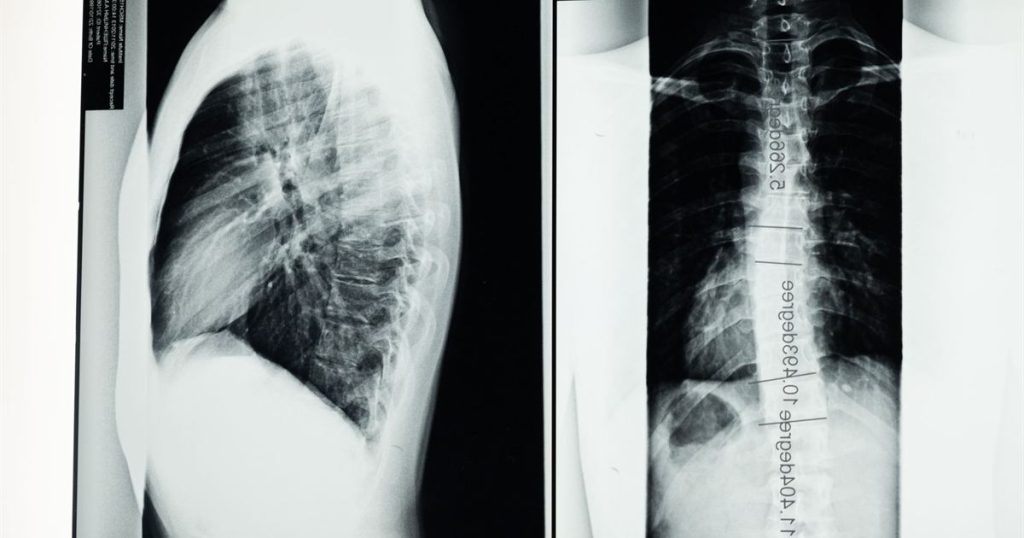
Scoliosis is a sideways curvature of the spine with a rotational component, measured on X-ray using the Cobb angle. A curve of 10 degrees or more meets the definition. Categories matter for what happens next. Idiopathic scoliosis has no identified cause and accounts for most cases, usually appearing during adolescent growth. Degenerative scoliosis develops in adults as discs and joints wear asymmetrically. Congenital and neuromuscular scoliosis relate to vertebral malformation or underlying neurological conditions. Severity drives management. Mild curves are usually monitored, moderate curves in growing adolescents may be braced, and large curves may need surgical assessment. The rotational element is why scoliosis is not simply a sideways bend. That rotation is what produces the rib prominence visible when someone bends forward.

What Chiropractic Care for Scoliosis Can Do

Treatment addresses the consequences of the curve rather than the curve itself. Pain management. Asymmetrical loading produces muscular pain, joint irritation, and stiffness. These respond to treatment as they would in anyone. Mobility. Segments above and below a curve often become restricted. Restoring their motion improves overall movement. Muscular balance. Muscles on the concave side shorten when the convex side lengthens and works harder. Soft tissue work and targeted exercise address that imbalance. Monitoring. Regular assessment tracks whether a curve is stable or progressing, particularly during adolescent growth. Scoliosis treatment chiropractic care delivers is symptomatic and supportive. That is a legitimate and useful role, and describing it accurately is what separates a responsible clinic from a marketing operation.

What It Cannot Do

The evidence does not support spinal manipulation reducing a scoliotic curve. Curves shown to reduce on repeat X-ray are frequently the product of positioning differences between images rather than structural change. Small differences in how someone stands, or in how the image was taken, change the measured Cobb angle. Be cautious with clinics offering intensive scoliosis correction programs at high cost, before and after images as primary evidence, guarantees of curve reduction, or long pre-paid packages for children. Specific exercise approaches such as Schroth-based methods have a developing evidence base, mainly around slowing progression and improving function rather than reversing established curves. That is different from manipulation-based correction claims. The Scoliosis Research Society publishes patient information setting out current management standards, and it is worth reading before committing to any program.

Adolescent Scoliosis and Monitoring

Adolescent idiopathic scoliosis usually appears during growth, and growth is when curves are most likely to progress. Monitoring matters more than treatment at this stage. Progression risk relates to how much growing remains and how large the curve already is. Signs parents notice include uneven shoulders, one shoulder blade more prominent, uneven waist, or a rib prominence when the child bends forward. Management should be led by an orthopedic specialist for anything beyond a mild curve. Chiropractic care can run alongside for pain and mobility, and it does not replace specialist monitoring. Routine repeat X-rays should be minimized in growing children. Imaging is done at intervals determined by a specialist, not at every visit.

Adult Scoliosis and Degenerative Curves

Adult scoliosis presents differently and is more often symptomatic. Two groups exist. Adults with idiopathic curves carried from adolescence, and adults developing degenerative curves through asymmetrical wear. Pain is the usual complaint rather than appearance. Back pain, leg symptoms from nerve compression where the curve narrows the spinal canal, and fatigue from asymmetrical muscle work. Treatment aims at function. Scoliosis and chiropractic care in adults is about maintaining mobility, managing pain, and supporting the strength that helps you tolerate the curve. Curves in adults do not need correcting to be manageable. Plenty of people live comfortably with substantial curves, and comfort rather than measurement is the goal.

Bracing, Surgery, and When They Apply

Both are specialist decisions and neither is a chiropractic call. Bracing applies to growing adolescents with moderate curves, aiming to slow progression during remaining growth. It does not reduce an existing curve and it is not used in skeletally mature adults. Surgery is usually considered for large curves, curves progressing even with bracing, or adult curves causing significant pain or neurological symptoms that have not responded to conservative care. Referral is appropriate for any adolescent with a suspected curve, any curve appearing to progress, neurological symptoms alongside a curve, or significant pain not responding to conservative treatment. A provider treating scoliosis without any relationship to specialist monitoring is working outside a reasonable model of care.

FAQs About Chiropractic Care for Scoliosis

Can chiropractic care straighten scoliosis? No. The evidence does not support spinal manipulation reducing a scoliotic curve. Treatment helps pain, mobility, and muscular imbalance around the curve. Claims of curve correction, particularly those relying on before and after X-rays, should be treated with caution since positioning differences alter measurements. Is chiropractic safe with scoliosis? Usually yes, with technique adapted to the curve and to bone density. The provider should know your curve type and severity, and should have seen recent imaging or specialist correspondence. Adolescents should be under specialist monitoring alongside any treatment. Will treatment stop my child’s curve from progressing? There is no good evidence that manipulation prevents progression. Progression risk relates to remaining growth and current curve size, and monitoring is led by an orthopedic specialist. Bracing is the established intervention for moderate curves during growth. Does scoliosis always cause pain? No. Many people with mild curves have no symptoms and discover them incidentally. Pain is more common in adults, particularly with degenerative curves, and relates more to how the spine loads than to the size of the curve itself. How often should scoliosis be X-rayed? Intervals are set by the specialist monitoring the curve, based on age, growth, and curve size. Routine imaging at every chiropractic visit is not appropriate, particularly in children where cumulative radiation exposure matters.

Get Your Symptoms Assessed

Treatment aimed at how your back feels and moves is worth having. Treatment sold as straightening your spine is not. An assessment sets realistic expectations first. Caron Chiropractic has provided chiropractic care in St. Paul for over 30 years, rated 4.9 stars across 385 Google reviews. Book My Assessment or call (651) 255-9999. Reviewed by Matthew R. Caron, D.C., Northwestern College of Chiropractic, 1992. This article is general information, not medical advice.  

Vertigo Chiropractic Care: What Helps and What Fails
Dizziness is a symptom with several unrelated causes. Treating the wrong one wastes months.

Table of Contents

  1. Types of Dizziness and What Causes Them
  2. Which Types Vertigo Chiropractic Care Can Help
  3. BPPV and the Epley Maneuver
  4. Cervicogenic Dizziness
  5. Dizziness After Chiropractic Care
  6. Symptoms That Need Urgent Medical Care
  7. FAQs About Vertigo Chiropractic Care
The room spins when you roll over in bed. It lasts under a minute, then stops. It happens again the next morning. That specific pattern has a specific cause and a specific treatment, and it is not the same condition as feeling usually unsteady on your feet. Vertigo chiropractic care is useful for a narrow set of causes and irrelevant to others. This guide separates the types, explains which respond, and names the symptoms that need a doctor rather than an appointment.

Types of Dizziness and What Causes Them

People use one word for four different experiences, and describing yours accurately shortens the diagnostic process considerably.
What you feel Likely category Common causes
The room spinning True vertigo Inner ear conditions, BPPV
Lightheaded, about to faint Presyncope Blood pressure, heart, dehydration
Unsteady on your feet Disequilibrium Neurological, muscular, age-related
Floating or detached Non-specific Anxiety, medication, migraine
True vertigo has a spinning component. That distinction matters, since spinning points toward the inner ear or the balance pathways rather than the circulation. Tell your provider which of those four best describes yours. “Dizzy” alone leaves the most important information out.

Which Types Vertigo Chiropractic Care Can Help

Two causes fall reasonably within scope. BPPV, benign paroxysmal positional vertigo, where displaced crystals in the inner ear produce brief spinning triggered by head position. This is treated with repositioning maneuvers rather than adjustment. Cervicogenic dizziness, where neck dysfunction disrupts the position information your brain uses for balance. This responds to neck treatment. Causes outside scope include Meniere’s disease, vestibular neuritis, medication effects, blood pressure problems, cardiac causes, and neurological conditions. Chiropractic care for vertigo does not treat these, and a provider should refer rather than attempt them. The screening question is what triggers it. Position-triggered spinning suggests BPPV. Dizziness with neck movement and neck pain suggests cervicogenic. Dizziness on standing suggests blood pressure. Constant dizziness with hearing changes suggests inner ear disease needing medical assessment.

BPPV and the Epley Maneuver

BPPV is the most common cause of true vertigo and among the most satisfying to treat. Tiny calcium crystals normally sit in one part of the inner ear. When they dislodge into the balance canals, head movement moves fluid across them and your brain receives a false signal of rotation. The signature is distinctive. Brief episodes lasting under a minute, triggered by specific positions such as rolling over, looking up, or lying down. No hearing change. Diagnosis uses a positional test, most commonly the Dix-Hallpike, which provokes the vertigo and lets the provider observe characteristic eye movement. Treatment uses repositioning maneuvers, the Epley being the best known, guiding the crystals back through a sequence of head positions. Many people improve substantially after one or two sessions. This is not spinal adjustment. It is a specific maneuver for a specific mechanical problem in the ear, and providers trained in it get good results.

Cervicogenic Dizziness

Your balance system uses three inputs. Your inner ears, your vision, and position sensors in your joints and muscles, particularly in the upper neck. Neck dysfunction disrupts that third input. The information from your neck conflicts with what your eyes and ears report, and that conflict produces unsteadiness. Features suggesting cervicogenic dizziness include neck pain or stiffness alongside the dizziness, symptoms provoked by neck movement rather than head position alone, unsteadiness rather than true spinning, and frequent onset after a neck injury such as whiplash. It is a diagnosis of exclusion. Inner ear and neurological causes should be ruled out first, since treating the neck for what turns out to be vestibular disease delays proper care. Treatment addresses the neck dysfunction directly, and balance retraining exercise usually runs alongside.

Dizziness After Chiropractic Care

Brief lightheadedness immediately after neck treatment is not uncommon and usually settles within minutes. It is usually attributed to changes in muscle tension and position sense in the treated area rather than anything vascular. That said, dizziness after chiropractic care warrants attention rather than dismissal. Contact your provider or seek medical care for dizziness that persists beyond a short period, or that comes with any of the following.
  • Severe headache unlike any before
  • Visual changes or double vision
  • Difficulty speaking or swallowing
  • Numbness in the face or a limb
  • Loss of coordination or weakness
Those combinations need urgent assessment. The likelihood is low and the correct response is immediate regardless. Tell your provider if you felt dizzy after a previous session. Technique and positioning are adjusted based on that.

Symptoms That Need Urgent Medical Care

Some presentations need emergency assessment rather than any appointment.
  • Sudden severe dizziness with weakness, numbness, or speech difficulty
  • Dizziness with a severe headache of sudden onset
  • New hearing loss alongside vertigo
  • Double vision, difficulty swallowing, or facial droop
  • Dizziness following head injury
  • Fainting or near-fainting episodes
  • Chest pain or palpitations with the dizziness
Sudden dizziness combined with neurological symptoms can indicate stroke. Treat that combination as an emergency. The National Institute on Deafness and Other Communication Disorders publishes patient information covering the range of balance disorders and their causes.

FAQs About Vertigo Chiropractic Care

Can a chiropractor treat vertigo? For certain causes. BPPV responds to repositioning maneuvers, and cervicogenic dizziness responds to neck treatment. Inner ear diseases, medication effects, blood pressure causes, and neurological conditions fall outside scope and need medical assessment. Diagnosis determines whether treatment is appropriate. How quickly does BPPV treatment work? Many people improve substantially after one or two repositioning sessions, and some resolve after a single maneuver. Symptoms can recur, and repeat treatment is usually effective. Failure to respond after several attempts suggests the diagnosis should be revisited. Is my dizziness coming from my neck? Possibly, where you have neck pain or stiffness alongside it, symptoms provoked by neck movement, unsteadiness rather than spinning, and onset after a neck injury. Cervicogenic dizziness is diagnosed after excluding inner ear and neurological causes, not before. Why do I feel dizzy after an adjustment? Brief lightheadedness after neck treatment is not uncommon and usually settles within minutes, usually attributed to changes in muscle tension and position sense. Persistent dizziness, or dizziness with headache, visual changes, speech difficulty, or numbness, needs immediate assessment. Should I see a doctor first? For new or severe dizziness, yes. Cardiac, neurological, and inner ear causes should be excluded before assuming a mechanical cause. Dizziness clearly triggered by rolling over in bed, with no other symptoms, is more straightforward and commonly assessed directly.

Get Your Dizziness Properly Identified

Describing exactly what your dizziness feels like, and what sets it off, narrows the cause quickly. An assessment establishes whether it is treatable here or needs a different route. Caron Chiropractic provides chiropractic care in St. Paul, rated 4.9 stars across 385 Google reviews. Book My Dizziness Assessment or call (651) 255-9999. Reviewed by Tim Graff, D.C., Northwestern College of Chiropractic, 2006. This article is general information, not medical advice.  
Neuropathy and Chiropractic Care: Honest Limits
Numbness and tingling have many causes. Only some of them are mechanical, and that distinction decides everything.

Table of Contents

  1. What Neuropathy Actually Means
  2. Which Nerve Problems Respond to Treatment
  3. Pinched Nerve Versus Peripheral Neuropathy
  4. How Neuropathy and Chiropractic Care Work Together
  5. What Chiropractic Cannot Treat
  6. Symptoms That Need Medical Assessment
  7. FAQs About Neuropathy and Chiropractic Care

Your feet tingle at night. Your hand goes numb holding a phone. You searched the symptoms and found results ranging from a trapped nerve to something serious. The honest position is that neuropathy is a symptom with many causes, and the cause determines whether manual treatment has anything to offer. Neuropathy and chiropractic care overlap where nerve symptoms come from mechanical compression. They do not overlap where the cause is metabolic, toxic, or systemic. This guide explains how to tell the difference and what treatment can reasonably be expected to do.

What Neuropathy Actually Means

Neuropathy means nerve damage or dysfunction. It is a description, not a diagnosis. Symptoms depend on which nerve fibers are affected. Sensory fibers produce numbness, tingling, burning, or pins and needles. Motor fibers produce weakness. Autonomic fibers affect functions such as sweating and blood pressure control. Peripheral neuropathy describes damage to nerves outside the brain and spinal cord, most often affecting the feet and hands first. Causes are wide-ranging. Diabetes is the most common, followed by mechanical compression, vitamin deficiency, certain medications including chemotherapy, alcohol use, thyroid disease, and autoimmune conditions. That list is why a proper assessment asks about far more than your back.

Which Nerve Problems Respond to Treatment

Mechanical compression is where manual treatment has a defensible role.
Cause Example Chiropractic role
Nerve root compression Disc pressing on a lumbar nerve Often helpful
Peripheral entrapment Carpal tunnel, thoracic outlet Sometimes helpful
Diabetic neuropathy Nerve damage from blood sugar Not the treatment; medical management leads
Chemotherapy-induced Nerve damage from drugs Not treatable by manual therapy
Vitamin B12 deficiency Metabolic nerve damage Needs medical correction
Chiropractic care for pinched nerve presentations is the clearest fit. A nerve compressed by a restricted joint or a disc has a mechanical cause and a mechanical solution. Symptoms that follow a specific nerve pathway, change with position, and improve when the spine is unloaded suggest compression. Symptoms in both feet, symmetrical, worse at night, and unrelated to position suggest something systemic.

Pinched Nerve Versus Peripheral Neuropathy

These get confused constantly and the treatments differ entirely. Pinched nerve. Usually one limb. Follows a defined path, such as down the back of one leg or into two fingers. Often triggered or relieved by specific positions. Frequently accompanied by neck or back pain. Peripheral neuropathy. Usually both sides. Starts in the toes or fingertips and spreads upward in a stocking or glove pattern. Worse at night. Not obviously affected by position. The distribution is the most useful clue. One limb suggests mechanical. Both feet symmetrically suggests systemic, and that needs blood work rather than adjustment. Peripheral neuropathy chiropractic care claims are common online and frequently overstated. A clinic promising to reverse diabetic neuropathy through spinal treatment is making a claim the evidence does not support.

How Neuropathy and Chiropractic Care Work Together

Where the cause is mechanical, treatment aims at decompression. Adjustment restores motion to the restricted segment contributing to nerve root irritation. Decompression creates space between vertebrae, lowering disc pressure so it retracts away from the nerve root. Soft tissue work addresses muscular entrapment points, such as the piriformis compressing the sciatic nerve or scalene muscles affecting the nerves to the arm. Exercise and nerve glides restore the nerve’s ability to slide through surrounding tissue, which is often lost after prolonged compression. Watch the pattern rather than the intensity. Symptoms retreating toward the spine, or numbness shrinking to a smaller area, indicates decompression even before the sensation improves. Where the cause is systemic, chiropractic care may still have a role in managing the musculoskeletal problems that come alongside it, without claiming to treat the neuropathy itself.

What Chiropractic Cannot Treat

Being clear about this matters more than being encouraging. Spinal treatment does not reverse diabetic neuropathy. Blood sugar management does, to the extent anything does, and that sits with your physician. It does not treat chemotherapy-induced neuropathy, alcohol-related nerve damage, or neuropathy from vitamin deficiency. The last responds to correcting the deficiency, which requires blood testing. It does not treat autoimmune or inherited neuropathies. Claims that adjustment restores damaged peripheral nerves in these conditions are not supported. The National Institute of Neurological Disorders and Stroke publishes information on peripheral neuropathy causes and management that is a better guide than any clinic page. Where a mechanical component coexists with a systemic cause, treatment can address that component. That is a narrower and more honest claim.

Symptoms That Need Medical Assessment

Get medical assessment rather than booking treatment for any of these.
  • Numbness or tingling in both feet, especially with a diabetes history
  • Progressive weakness in a limb
  • Loss of bladder or bowel control
  • Numbness across the saddle area
  • Symptoms following chemotherapy or a new medication
  • Sudden numbness with weakness or speech difficulty, which needs emergency care
Blood testing identifies several treatable causes, including diabetes, thyroid dysfunction, and B12 deficiency. Those are worth ruling out before assuming a mechanical cause. A provider who examines nerve symptoms without asking about diabetes, medications, and alcohol has not taken an adequate history.

FAQs About Neuropathy and Chiropractic Care

Can chiropractic care cure neuropathy? No. Where nerve symptoms come from mechanical compression, treatment can relieve that compression and symptoms may resolve. Where the cause is metabolic, toxic, or systemic, spinal treatment does not address it. Any claim to cure neuropathy usually should be treated as a warning sign. Can chiropractic help diabetic neuropathy? Not directly. Diabetic neuropathy results from nerve damage related to blood sugar, and management sits with your medical team. Treatment may help coexisting musculoskeletal problems, and that is a separate and narrower claim than treating the neuropathy. How do I know if my numbness is a pinched nerve? Pinched nerve symptoms usually affect one limb, follow a defined path, and change with position. Peripheral neuropathy usually affects both sides symmetrically, starts at the toes or fingertips, and is worse at night. An examination with neurological testing distinguishes them. How long before nerve symptoms improve? Mechanical compression often improves within 4 to 6 weeks, with the pattern changing before the sensation does. Nerves recover slowly, and numbness can persist after the compression is relieved. Long-standing compression takes longer than recent onset. Do I need an MRI for nerve symptoms? Not always. Imaging is indicated for progressive weakness, red flag symptoms, or failure to improve with conservative care. Symmetrical symptoms in both feet usually warrant blood testing before imaging, since the likely causes are metabolic rather than structural.

Get Your Nerve Symptoms Examined

An examination establishes whether your symptoms are mechanical or systemic. That single answer determines whether treatment is appropriate or whether you need blood work. Caron Chiropractic provides chiropractic care in St. Paul, rated 4.9 stars across 385 Google reviews. Book My Nerve Assessment or call (651) 255-9999. Reviewed by Matthew R. Caron, D.C., Northwestern College of Chiropractic, 1992. This article is general information, not medical advice.  

Tension Headaches Chiropractic Care: Real Relief
Most headaches that respond to neck treatment were never really head problems.

Table of Contents

  1. Which Headaches Respond to Treatment
  2. How Tension Headaches Chiropractic Care Works
  3. Cervicogenic Headache, the One Most Missed
  4. Chiropractic Care for Migraines
  5. TMJ and Jaw-Related Headaches
  6. Headaches That Need Urgent Assessment
  7. FAQs About Tension Headaches Chiropractic Care
You have taken painkillers three days this week. They work for four hours. The headache always starts the same way, at the base of your skull, spreading up and behind one eye by afternoon. That pattern points at your neck rather than your head. Tension headaches chiropractic care works on the joints and muscles at the top of the neck that refer pain into the skull. This guide covers which headache types respond, which do not, how treatment works, and the warning signs that mean a headache needs medical assessment rather than an appointment.

Which Headaches Respond to Treatment

Not every headache is a neck problem, and honest treatment starts by sorting them.
Type Typical pattern Response to treatment
Tension-type Band-like pressure both sides, builds through the day Often good
Cervicogenic One side, starts at skull base, worse with neck movement Often good
Migraine Throbbing, often one side, nausea, light sensitivity Mixed, may reduce frequency
Cluster Severe, around one eye, in bouts Poor, needs medical management
Medication overuse Daily, rebounds as painkillers wear off Needs the medication addressed first
The last row catches people out. Taking painkillers more than about two days a week can produce headaches of its own, and no manual treatment resolves that when the pattern continues. Chiropractic care for headaches is most useful for the first two rows and worth trying for the third.

How Tension Headaches Chiropractic Care Works

The mechanism is referral. Structures in the upper neck share nerve pathways with the head, so irritation there produces pain felt in the skull. Joint restriction in the top three cervical segments is the most common finding. These joints refer pain into predictable head patterns. Muscle tension in the suboccipitals, the small muscles at the base of the skull, produces pain felt behind the eyes. Forward head posture loads both continuously, which is why desk workers report this pattern more than anyone. Treatment combines adjustment or mobilization of the restricted segments, soft tissue work on the suboccipitals and upper trapezius, and exercise for the deep neck flexors that hold your head position. Frequency of headaches usually changes before intensity does. Fewer headaches at the same severity is progress, and it is the first thing to track.

Cervicogenic Headache, the One Most Missed

Cervicogenic headache is a headache caused by a problem in the neck, and it gets diagnosed as migraine constantly. Distinguishing features:
  • Pain usually stays on one side and does not switch
  • It starts at the base of the skull and spreads forward
  • Neck movement or sustained posture brings it on
  • Neck range of motion is reduced on examination
  • Pressure on specific upper neck joints reproduces the headache
That last point is the most useful. A headache that can be reproduced by pressing a joint in the neck is telling you where it comes from. Migraine treatment does not usually help cervicogenic headache, which is why people arrive having tried several medications without success. The problem is not the medication. It is the diagnosis.

Chiropractic Care for Migraines

Migraine is a neurological condition, not a mechanical one, and treatment should be described accordingly. Chiropractic care for migraines does not treat the underlying neurological process. Where it helps, it does so by addressing neck dysfunction that acts as a trigger or that coexists with migraine and adds to the burden. Realistic expectations. Some people report reduced frequency. Some report no change. Nobody should promise you migraine resolution through spinal treatment. Migraine management usually needs a medical lead, and neck treatment sits alongside it. The American Migraine Foundation publishes patient guidance covering the range of approaches. Keep a headache diary if you try treatment. Recording frequency, duration, and triggers gives you an actual answer at eight weeks rather than an impression.

TMJ and Jaw-Related Headaches

Jaw dysfunction produces headache more often than people expect. The temporomandibular joint sits directly in front of your ear, and the muscles working it attach across the side of your head. Clenching or grinding fatigues those muscles, producing pain felt at the temple. Signs your headache is jaw-related include clicking or locking when opening your mouth, pain that worsens with chewing, morning headaches suggesting night grinding, and tenderness in the muscle at your temple. Chiropractic care for TMJ addresses the joint and surrounding muscle, alongside the upper neck, which is almost always involved. Dental management for grinding runs alongside it where night clenching is the driver. Co-management with your dentist is normal here. A night guard addresses the cause; treatment addresses the accumulated tension.

Headaches That Need Urgent Assessment

Some headaches need emergency care, not an appointment.
  • The worst headache of your life, arriving suddenly
  • Headache with fever, neck stiffness, and light sensitivity
  • Headache after a head injury
  • Headache with confusion, weakness, numbness, or difficulty speaking
  • Headache with visual loss or double vision
  • A new headache pattern after age 50
  • Headache worsening steadily over weeks
  • Headache that is worse when lying down or on waking
Any of these need medical assessment first. A responsible provider screens for them before treating and refers immediately where they appear.

FAQs About Tension Headaches Chiropractic Care

How many sessions before headaches improve? Many people notice a change in frequency within 3 to 4 weeks. Frequency usually improves before intensity. Long-standing daily headaches take longer than intermittent ones. If nothing has changed after several weeks, the diagnosis should be revisited rather than the treatment repeated. Can chiropractic care cure migraines? No. Migraine is a neurological condition and no manual treatment cures it. Treatment may reduce frequency where neck dysfunction acts as a trigger or adds to the overall burden. Anyone promising migraine resolution through adjustment is overstating what the evidence supports. Why do my headaches start at the base of my skull? That pattern usually points to the upper cervical joints and the suboccipital muscles. Both refer pain into the head through shared nerve pathways. It is the most common presentation for cervicogenic and tension-type headache, and it responds well to treatment aimed at the neck. Can my desk setup cause headaches? Yes, frequently. Forward head posture loads the upper neck joints and suboccipital muscles continuously through the working day. Monitor height, chair position, and how often you change position all contribute. Correcting the setup stops recreating the problem once treatment has addressed it. Should I stop taking painkillers? Not without medical advice. Taking painkillers more than roughly two days a week can cause medication overuse headache, which needs supervised management rather than abrupt stopping. Discuss it with your physician, since stopping suddenly can make things worse temporarily.

Get Your Headache Pattern Assessed

A headache that starts at the base of your skull and responds to painkillers for four hours is a pattern worth examining rather than medicating indefinitely. Caron Chiropractic provides chiropractic care in St. Paul, rated 4.9 stars across 385 Google reviews. Book My Headache Assessment or call (651) 255-9999. Reviewed by Tim Graff, D.C., Northwestern College of Chiropractic, 2006. This article is general information, not medical advice.  
Massage With Chiropractic Care: A Smarter Combination
Booking one when you needed the other is the most common wasted month in pain treatment.

Table of Contents

  1. Why the Three Get Combined
  2. Chiropractic Care vs Physical Therapy
  3. Massage vs Chiropractic Adjustment
  4. Where Acupuncture Fits
  5. What a Combined Plan Looks Like
  6. Choosing Where to Start
  7. FAQs About Massage With Chiropractic Care
You have a stiff neck and three tabs open. One clinic says adjustment. One says deep tissue. One says strengthening. They are describing three different tools, and most soft tissue problems need more than one. Massage with chiropractic care is the most common pairing for a straightforward reason. Joints and the muscles controlling them are one system, and treating half of it tends to produce half a result. This guide covers what each discipline actually does, how they compare, and how to work out where to start.

Why the Three Get Combined

A restricted joint and a tight muscle create each other. When a spinal joint stops moving properly, the muscles around it tighten to protect it. That tension then holds the joint where it is. Treat only the joint and the muscle pulls it back. Treat only the muscle and the restricted joint retightens it within days. That loop is why booking massage with chiropractic care produces better results than either on its own for most people. The adjustment restores motion. The soft tissue work releases what was holding it. Physical therapy adds the third element. Neither adjustment nor massage builds the strength that keeps the joint stable once treatment stops. Passive treatment relieves. Active work holds the relief. Most relapses come from stopping after the first part.

Chiropractic Care vs Physical Therapy

The difference between physical therapy and chiropractic care is mostly one of emphasis, and the overlap is larger than either profession usually admits.
Chiropractic Physical therapy
Primary tool Joint adjustment and mobilization Prescribed exercise and loading
Typical focus Restoring joint motion Restoring strength and function
Session shape Shorter, more frequent early on Longer, with a home program
Best suited to Acute joint restriction and pain Rebuilding capacity, post-injury return
Chiropractic care vs physical therapy is rarely a real either-or. Acute pain with clear joint restriction usually responds faster to adjustment. Rebuilding after the pain settles is what physical therapy does best. Physiotherapy vs chiropractic care comes up as a search since people assume they must choose. In a clinic offering both, you usually do not.

Massage vs Chiropractic Adjustment

These target different tissue. An adjustment applies a specific force to a joint that is not moving through its normal range. The target is the joint. Massage therapy works on muscle, fascia, and other soft tissue. The target is tension, adhesion, and blood flow. Massage vs chiropractic care as a choice depends on what is driving your symptoms. Rough guide:
  • Muscle tension without joint restriction responds well to massage alone
  • Joint restriction with protective guarding usually needs both
  • Nerve symptoms travelling into an arm or leg need assessment before either
Order matters within a session. Soft tissue work before an adjustment reduces the guarding, which means less force is needed and the result usually holds longer. Ashton Johnson, C.M.T. at Caron works in deep tissue, sports massage, medical massage, myofascial release, and trigger point therapy. Those are distinct approaches, not a menu of names for the same hour.

Where Acupuncture Fits

Acupuncture is the one people add last, usually for pain that has not responded to the others. It uses fine needles at specific points to influence pain signaling and muscle tone. In a musculoskeletal setting it is most often used for persistent pain, headache, and stubborn trigger points. The National Center for Complementary and Integrative Health summarizes the current research on acupuncture for pain conditions, and it is a more balanced starting point than most clinic pages on the subject. Practical advantage of a clinic offering it in house. Dan Hadfield, D.C. is certified in acupuncture alongside his chiropractic degree, so the decision to add it comes from someone who has already examined you.

What a Combined Plan Looks Like

A sensible plan changes shape over time rather than repeating one thing. Early, roughly weeks 1 to 2. Higher frequency. Focus on reducing pain and restoring motion. Adjustment plus soft tissue work, minimal exercise beyond gentle movement. Middle, roughly weeks 3 to 6. Frequency drops. Exercise becomes the larger part. Treatment maintains the gains between sessions. Late. Mostly self-managed. Occasional treatment where something flares. The home program continues. Any plan that looks identical in week 6 to week 1 is not a plan. It is a subscription. You should be doing more of the work as time passes, not less.

Choosing Where to Start

Three questions get most people to the right first appointment. Is there nerve involvement? Numbness, tingling, or weakness travelling into a limb means get examined first, before booking any hands-on treatment. Is the pain acute or long-standing? New, sharp, movement-limiting pain usually points toward assessment and adjustment. Long-standing tightness without a clear incident often responds well starting with soft tissue work. Has anything already failed? Six weeks of massage that helped for two days each time suggests a joint or loading problem underneath that massage cannot reach. An examination answers all three in one appointment. Guessing costs a month.

FAQs About Massage With Chiropractic Care

Should I get massage before or after my adjustment? Before, in most cases. Soft tissue work reduces the muscular guarding around a restricted joint, which means the adjustment needs less force and the result tends to hold longer. Your provider may reverse the order for specific presentations. Can I book massage with chiropractic care on the same day? Yes, and same-day scheduling is common. Some people prefer to separate them by a day or two early in care when tissue is irritable. Either works. Consistency matters more than sequence. Do I need a referral for physical therapy in Minnesota? Minnesota allows direct access to physical therapy, so you can usually book without a physician referral. Your insurance plan may still require one for coverage, which is worth checking with your insurer before your first visit. Is one better than the other for back pain? Neither is better across the board. Acute back pain with joint restriction often responds faster to adjustment. Recurrent back pain linked to weakness or poor movement patterns responds better to loading. Most cases involve both, which is why combined care is common. How do I know when to stop treatment? When you can do what you need to do without symptoms limiting you, and your home program maintains it. Your provider should be reducing visit frequency as you improve. Treatment that never tapers deserves a direct question.

Get Assessed Once, Not Three Times

One examination establishes which of the three you need and in what order. That beats booking each in turn and losing a month per attempt. Caron Chiropractic offers chiropractic care, physical therapy, massage therapy, and acupuncture under one roof in St. Paul, rated 4.9 stars across 385 Google reviews. Book My Assessment or call (651) 255-9999. Reviewed by Dan Hadfield, D.C., Northwestern Health Sciences University, certified in acupuncture. This article is general information, not medical advice.  
Is Chiropractic Care Safe? Risks You Should Know
The honest answer involves naming the risks rather than dismissing the question.

Table of Contents

  1. Is Chiropractic Care Safe?
  2. Known Risks and How Rare They Are
  3. Normal Soreness Versus a Problem
  4. What Happens at a First Visit
  5. “Is It Just Pseudoscience?”
  6. Warning Signs of a Provider to Avoid
  7. FAQs About Whether Chiropractic Care Is Safe
Searching this question returns two kinds of page. Clinic sites saying it is completely safe, and forums saying it is dangerous. Neither helps you decide. Every treatment carries some risk, and useful information tells you what those risks are, how likely they are, and what reduces them. Is chiropractic care safe is a fair question that deserves a direct answer rather than reassurance. This guide covers the known risks, what a proper first visit involves, how to read the criticism, and the specific things that should make you leave a clinic.

Is Chiropractic Care Safe?

Chiropractic care is usually considered safe when delivered by a licensed provider after appropriate screening. The most common effect is temporary soreness after treatment, reported by a substantial minority of patients and typically resolving within 24 to 48 hours. Serious adverse events are rare in the published literature. Risk relates far more to screening quality and technique selection than to the treatment category itself. That last sentence is the important one. Safety is not a property of chiropractic in general. It is a property of a specific provider examining a specific person and choosing an appropriate technique.

Known Risks and How Rare They Are

Three categories of risk, in descending frequency. Common and minor. Soreness in the treated area, temporary stiffness, mild headache, fatigue after treatment. These settle within a day or two and are the ordinary response to manual therapy. Uncommon. Increased pain requiring a change of approach, rib irritation with forceful thoracic technique, and aggravation of an undiagnosed underlying condition. Rare and serious. The most discussed is cervical artery dissection, a tear in an artery in the neck, which can cause stroke. This is the risk behind most criticism of neck manipulation. The evidence on that association is genuinely debated. Some research suggests people with an artery already tearing seek treatment for the neck pain the tear causes, meaning the visit follows the problem rather than causing it. Other work argues for a causal contribution. It has not been fully settled. What follows from that uncertainty is practical. Screening matters, lower-force alternatives exist, and any provider should discuss both. Risks of chiropractic care being rare is not a reason to skip the conversation.

Normal Soreness Versus a Problem

Knowing the difference prevents both unnecessary worry and dangerous delay. Expected. Mild ache in the treated area starting within a few hours, similar to the day after unfamiliar exercise, settling within 24 to 48 hours, and improving with gentle movement. Not expected. Pain that is sharp rather than achy, symptoms that are worse at 72 hours than at 24, new symptoms in a limb, or anything involving your head and vision. Contact your provider the same day for any of the following.
  • Severe headache unlike any you have had before
  • Dizziness, visual changes, or difficulty speaking
  • Numbness, weakness, or tingling in an arm or leg
  • Facial numbness or loss of coordination
Can chiropractic care hurt you is best answered by that list. The likelihood is low. The correct response to those symptoms is immediate regardless.

What Happens at a First Visit

A proper first appointment is mostly conversation and examination. Treatment, where it happens at all, comes last. Expect a detailed history covering your symptoms, previous injuries, medical conditions, medications, and any history of headaches, dizziness, or vascular problems. Those last three exist in particular to screen for the rare risks. Physical examination covers range of motion, joint restriction, muscle testing, and a neurological screen of reflexes, strength, and sensation. You should leave with an explanation of what your provider found, what they think is causing it, what treatment they propose, and roughly how long before you reassess. What to expect from chiropractic care on day one is not a long treatment. A provider who adjusts you within five minutes of meeting you has not examined you.

“Is It Just Pseudoscience?”

The criticism is worth engaging with rather than dodging, since it contains something true. Chiropractic began in the 1890s with a theory that spinal misalignment caused most disease. That original theory is not supported by evidence and has been abandoned by most of the profession. The part that holds up is manual therapy for musculoskeletal problems. Spinal manipulation for low back pain appears in clinical guidelines from bodies including the American College of Physicians, alongside other conservative treatments. The part that does not hold up is any claim that adjustment treats conditions unrelated to the musculoskeletal system. Immune function, blood pressure, allergies, and general wellness through adjustment are not supported. A clinic describing itself as evidence based should be willing to say that plainly. Judging a provider by which claims they make is more useful than judging the whole field.

Warning Signs of a Provider to Avoid

Six things should end the relationship.
  • Treatment on the first visit with no meaningful examination
  • A large pre-paid package required before any assessment
  • Routine X-rays for everyone regardless of symptoms
  • Claims to treat conditions unrelated to the musculoskeletal system
  • Discouraging you from seeing your physician, or from telling them
  • A plan that never reduces in frequency no matter how well you do
The last one is the most common and the least dramatic. Care that improves you should require less of you over time. Good practice looks like the opposite. Examination before treatment, clear reassessment points, referral where indicated, and a plan that tapers.

FAQs About Whether Chiropractic Care Is Safe

Is chiropractic care safe for everyone? No treatment suits everyone. Certain conditions require modified technique or rule out manipulation, including osteoporosis, inflammatory arthritis, recent fracture, spinal infection, some cancers, and bleeding disorders. This is why the history matters. Disclose all conditions and medications, and appropriate alternatives can be used. Is neck adjustment more dangerous than back adjustment? The rare serious risk discussed in the literature relates in particular to the neck. The likelihood remains low, and lower-force alternatives including mobilization and instrument-assisted technique are available. Tell your provider if you would prefer to avoid manipulation of the neck and it will be accommodated. Is chiropractic care safe during pregnancy? It is widely considered safe with a provider trained in prenatal technique, using pregnancy-appropriate positioning and reduced force. Certain complications require postponing treatment and referring to your obstetric team. Tell any provider you are pregnant before treatment, including very early on. Is chiropractic care safe for children? Serious adverse events in children are rare when treatment is delivered by a provider with pediatric training using age-appropriate force. Adult technique is never appropriate for a child. Ask directly what pediatric training a provider holds. What should I do if I feel worse after treatment? Mild soreness for a day or two is expected. Contact your provider the same day for pain that is sharp, worsening after 48 hours, or accompanied by new limb symptoms. Seek emergency care immediately for severe headache, dizziness, visual changes, or difficulty speaking.

Ask Your Questions Before You Book

A clinic that answers safety questions directly on the phone is showing you how it operates. Ask before you commit to anything. Caron Chiropractic has provided chiropractic care in St. Paul for over 30 years, rated 4.9 stars across 385 Google reviews. Ask My Questions or call (651) 255-9999. Reviewed by Matthew R. Caron, D.C., Northwestern College of Chiropractic, 1992. This article is general information, not medical advice.  

Does Medicare Cover Chiropractic Care? Costly Gaps
Medicare covers one chiropractic service and nothing else. Knowing which one prevents an unexpected bill.

Table of Contents

  1. Does Medicare Cover Chiropractic Care?
  2. What Medicare Part B Pays For
  3. What Medicare Does Not Cover
  4. Private Insurance and Chiropractic Care
  5. What Treatment Costs Without Insurance
  6. Questions to Ask Before Your First Visit
  7. FAQs About Medicare and Chiropractic Care
Few things sour a treatment plan faster than a bill you were not expecting. Coverage for chiropractic care is genuinely confusing. Medicare covers a single service under narrow conditions. Private plans vary widely, and two people at the same clinic on the same day can face very different costs. This guide answers whether Medicare covers chiropractic care, what Part B actually pays, where private insurance usually lands, and what treatment costs when you pay directly. Coverage details change, so treat this as orientation and verify your own plan before booking.

Does Medicare Cover Chiropractic Care?

Medicare Part B covers manual manipulation of the spine to correct a subluxation, performed by a licensed chiropractor. That is the only chiropractic service Original Medicare covers. Examinations, X-rays, therapies, and supports are not covered when provided by a chiropractor, even where clinically appropriate. That single sentence explains most of the surprise bills. The distinction is between the adjustment itself and everything surrounding it. The adjustment is covered. The examination that determines whether you need one is not. Medicare Advantage plans work differently. They must cover at least what Original Medicare does, and many add benefits beyond it. Coverage of examinations and therapies under an Advantage plan depends entirely on the individual plan.

What Medicare Part B Pays For

Coverage requires specific conditions to be met. The treatment must be manual manipulation of the spine. The purpose must be correcting a subluxation, meaning a spinal joint that has lost normal position or motion. The provider must be a licensed chiropractor. Care must be active rather than maintenance. Medicare draws a firm line here. Treatment aimed at improving a condition is covered. Treatment aimed at maintaining a level already reached is not, and Medicare’s own definition of chiropractic maintenance care governs that call. You remain responsible for your Part B deductible and the standard coinsurance percentage once it is met. Your provider documents the subluxation and the treatment goal to support the claim. That documentation is what determines payment, which is one reason careful notes matter beyond clinical use.

What Medicare Does Not Cover

The exclusions catch more people than the inclusions.
  • Examinations, including your initial assessment
  • X-rays ordered by a chiropractor
  • Therapies such as ultrasound, traction, or electrical stimulation
  • Massage therapy and acupuncture
  • Supports and orthotics
  • Maintenance care once active improvement has stopped
Medicare coverage of chiropractic care being limited to the adjustment means most people pay directly for their first visit, since the first visit is mostly examination. Ask your clinic to explain which parts of a proposed plan Medicare will cover before you start. A clinic that handles Medicare regularly answers this quickly and without discomfort.

Private Insurance and Chiropractic Care

Does insurance cover chiropractic care outside Medicare? Usually yes, in some form, with limits. Most private plans include a chiropractic benefit. Typical structures include an annual visit cap, a per-visit copay, a deductible, and sometimes a requirement for referral or pre-authorization. Caron Chiropractic works with BCBS, Cigna, Aetna, Humana, Health Partners, United Health Care, Ucare, Medica, UMR, Primewest, Medicare, and Medicare Advantage plans. Three things determine what you actually pay.
Factor Question to ask your insurer
Visit limit How many chiropractic visits per year does my plan allow?
Cost share What is my copay or coinsurance per visit?
Deductible Does my deductible apply before chiropractic benefits start?
Will my insurance cover chiropractic care is a question only your insurer can answer definitively. A clinic can verify benefits on your behalf, and most will if you call ahead with your details.

What Treatment Costs Without Insurance

Self-pay costs vary by region and by what a visit includes. An initial visit costs more than a follow-up everywhere, since it includes examination time. Follow-up adjustment visits are shorter and priced accordingly. Additional services such as decompression, therapies, or massage are usually priced separately. Ask for a written schedule of fees before starting. Any clinic should provide one on request. Watch for pre-paid packages. Large upfront packages committing you to a fixed number of visits before anyone has examined you are a commercial arrangement rather than a clinical one. A plan should be able to change when your response does. Health savings and flexible spending accounts usually cover chiropractic care as a qualified medical expense, which lowers the effective cost for self-pay patients.

Questions to Ask Before Your First Visit

Five questions, answered before you book, prevent almost every billing surprise.
  1. Do you accept my specific plan, and are you in network?
  2. Will you verify my benefits before my first appointment?
  3. What does the initial visit cost if my plan does not cover examinations?
  4. Which parts of a typical plan does my insurance not cover?
  5. What are your self-pay rates for follow-up visits?
Call your insurer with the same questions. Where the two answers differ, your insurer’s version is the one that governs your bill. The Centers for Medicare and Medicaid Services publishes the current position on chiropractic coverage, and it is the authoritative source rather than any clinic page, including this one.

FAQs About Medicare and Chiropractic Care

Does Medicare cover chiropractic care for maintenance? No. Medicare covers manual spinal manipulation only where treatment is expected to improve your condition. Once care becomes maintenance, meaning it maintains a level already reached rather than improving on it, Medicare stops covering it. Your provider should tell you when that transition is approaching. Does Medicare Part B cover chiropractic X-rays? No. X-rays ordered by a chiropractor are not covered by Part B, even where clinically justified. Imaging ordered by a physician under a separate diagnostic pathway follows different rules. Ask before imaging is taken rather than after. How many chiropractic visits does Medicare allow? Original Medicare does not set a fixed annual visit cap. Coverage depends on whether treatment remains medically necessary and active rather than maintenance. Documentation supporting that necessity determines payment, so the practical limit varies by case. Do Medicare Advantage plans cover more? Often, yes. Advantage plans must cover at least what Original Medicare covers and many add benefits such as examinations or additional visits. Coverage varies plan by plan, so check your specific plan documents rather than assuming. What if my insurance denies a claim? Ask your provider for the billing codes and documentation submitted, then request a written explanation of the denial from your insurer. Many denials are coding or documentation issues rather than genuine coverage exclusions, and they can be resubmitted.

Check Your Coverage Before You Book

Ten minutes verifying benefits prevents most billing disputes. Caron’s team checks plans before your first appointment when you call ahead with your details. Caron Chiropractic has provided chiropractic care in St. Paul for over 30 years, rated 4.9 stars across 385 Google reviews. Check My Coverage or call (651) 255-9999. Reviewed by Matthew R. Caron, D.C., Northwestern College of Chiropractic, 1992. This article is general information, not medical or insurance advice. Coverage rules change. Verify with your own plan.  
Neck Pain and Chiropractic Care: Proven Relief Options
Neck pain that keeps coming back is rarely a muscle problem, which is why stretching keeps failing.

Table of Contents

  1. Why Neck Pain Starts
  2. How Neck Pain and Chiropractic Care Fit Together
  3. Upper Cervical Care and What It Targets
  4. Text Neck and Desk Posture
  5. Is Soreness After an Adjustment Normal?
  6. When Neck Pain Needs More Than Treatment
  7. FAQs About Neck Pain and Chiropractic Care
You stretch it. It eases for an hour. By afternoon it is back, and by Thursday you are taking painkillers to get through meetings. That cycle points to a joint that has stopped moving properly rather than a muscle that needs lengthening. The muscle tightens to protect the joint, and stretching the muscle does nothing about the joint underneath. Neck pain and chiropractic care are commonly paired since adjustment addresses the joint directly. This guide covers what causes most neck pain, what treatment involves, what upper cervical care is, and when neck pain needs a different route entirely.

Why Neck Pain Starts

Your neck holds a head weighing roughly 10 to 12 pounds through seven small vertebrae with a large range of motion. That combination is mobile and not especially stable. Most neck pain comes from a small number of sources.
  • Joint restriction in the facet joints at the back of the spine
  • Muscular guarding that develops around a restricted joint
  • Disc irritation, which may refer pain into the shoulder or arm
  • Sustained posture, particularly forward head position at a desk
  • Injury, most commonly whiplash from a crash
The pattern of your pain narrows it considerably. Pain with a specific movement suggests joint restriction. Pain travelling below the elbow suggests nerve involvement. Constant aching regardless of position suggests something else again. Chiropractic care for neck pain starts by working out which of these you have, since the treatment differs.

How Neck Pain and Chiropractic Care Fit Together

Treatment targets the restricted joint and everything that has built up around it. Adjustment restores motion to a specific segment that has stopped moving through its normal range. The audible pop is gas releasing from the joint fluid, not bones moving back into place. Mobilization achieves similar goals with slower, lower-force movement. It is used where tissue is irritable or where a patient prefers it. Soft tissue work releases the protective muscle tension. That tension holds the joint restricted, so leaving it in place undoes the adjustment within days. Exercise rebuilds the deep neck flexors, which switch off with sustained pain and do not switch back on unprompted. Cervical chiropractic care rarely needs to be forceful. The neck responds to less input than the lower back, and a good provider uses the least force that achieves the change.

Upper Cervical Care and What It Targets

Upper cervical care chiropractic techniques focus on the top two vertebrae, the atlas and axis, which carry the head and allow most of its rotation. The reasoning is that these two segments have unusual anatomy and a close relationship with the brainstem, so restriction there produces effects beyond local pain. Headache, dizziness, and jaw symptoms are commonly attributed to upper cervical dysfunction. Techniques in this family use very low force and precise positioning rather than general manipulation. Some use instruments; some use sustained light contact. Upper cervical chiropractic care suits people who want a gentler approach, and those whose symptoms concentrate at the base of the skull. It is one approach among several rather than a separate discipline, and claims that it treats conditions unrelated to the musculoskeletal system are not supported.

Text Neck and Desk Posture

Forward head posture is the most common aggravator in desk workers. Every inch your head moves forward of your shoulders substantially increases the load your neck muscles carry to hold it there. Hold that for eight hours and the tissue fatigues. Practical changes that help more than stretching alone:
  • Raise your monitor so the top of the screen sits at eye level
  • Bring your phone up toward your face rather than dropping your head
  • Change position every 30 minutes, since the best posture is the next one
  • Set your chair so your forearms rest level with your desk
Posture correction alone rarely resolves established neck pain. It stops you re-creating it, which matters once treatment has restored the motion.

Is Soreness After an Adjustment Normal?

Mild soreness in the 24 hours after an adjustment is common and usually harmless, similar to the day after unfamiliar exercise. It typically affects the treated area and settles on its own. Neck pain after chiropractic care that is sharp, worsening, or accompanied by new symptoms is not expected, and you should contact your provider. Two things reduce it. Drinking water and staying gently mobile rather than resting completely. Tell your provider what you experienced at your next visit either way. Technique and force get adjusted based on how you responded, and a provider who does not ask is not paying attention.

When Neck Pain Needs More Than Treatment

Certain symptoms need medical assessment rather than a chiropractic appointment.
  • Neck pain following significant trauma, such as a crash or fall
  • Weakness, numbness, or tingling in an arm or hand
  • Severe headache unlike any you have had before
  • Neck pain with fever, unexplained weight loss, or a history of cancer
  • Dizziness, visual changes, difficulty speaking, or facial numbness
  • Loss of coordination or balance
The last group matters most. Those symptoms can indicate a vascular problem and need urgent assessment, not manipulation. Guidance from the American Chiropractic Association supports thorough screening before cervical treatment for exactly these reasons. A provider who examines your neck without asking about headaches, dizziness, or recent trauma has skipped a step.

FAQs About Neck Pain and Chiropractic Care

Is neck adjustment safe? Serious complications are rare in the published literature. Risk is managed through screening, which is why a provider asks about headaches, dizziness, trauma, and vascular history before treating. Lower-force alternatives including mobilization and upper cervical technique are available for anyone uncomfortable with manipulation. Say so and it will be accommodated. How many sessions will I need for neck pain? Most people notice change within 2 to 3 weeks, with acute cases resolving faster than long-standing ones. Frequency should reduce as you improve. A plan that looks the same in week 6 as week 1 needs a direct question. Why does my neck pain keep returning? Recurrence usually means the joint motion was restored but the supporting muscle and daily loading were not addressed. Deep neck flexors weaken with sustained pain and need specific retraining. Desk setup that recreates the original loading will recreate the original problem. Can chiropractic help neck pain with arm symptoms? Sometimes, once the cause is identified. Arm symptoms suggest nerve involvement, which requires examination before any treatment. Where a restricted joint or disc is irritating a nerve root, treatment can help. Progressive weakness needs medical assessment first. Should I use heat or ice on my neck? Ice suits fresh injury in the first 48 hours where swelling is present. Heat suits ongoing muscular tension and stiffness. For long-standing neck pain without recent injury, heat before gentle movement is usually more comfortable. Neither replaces treating the underlying restriction.

Get Your Neck Assessed

Neck pain returning every few weeks is a pattern, not bad luck. An examination identifies which segment is restricted and what keeps re-loading it. Caron Chiropractic has provided chiropractic care in St. Paul for over 30 years, rated 4.9 stars across 385 Google reviews. Book My Neck Assessment or call (651) 255-9999. Reviewed by Matthew R. Caron, D.C., Northwestern College of Chiropractic, 1992. This article is general information, not medical advice.  

Spinal Decompression Chiropractic Care: A Clear Guide
A disc problem does not always need surgery. Here is what non-surgical care actually does, and when it stops being the right answer.

Table of Contents

  1. What Is Spinal Decompression Chiropractic Care?
  2. Herniated, Bulging, and Slipped Discs Explained
  3. How Spinal Decompression Chiropractic Care Eases Disc Pressure
  4. Spinal Stenosis and Degenerative Disc Disease
  5. What a Real Treatment Plan Looks Like
  6. When Decompression Is the Wrong Choice
  7. FAQs About Spinal Decompression Chiropractic Care
Waking up unable to straighten your back is frightening. So is the word “surgery.” Most people with disc pain land somewhere between those two, hurting enough to worry and unsure what the middle option looks like. That middle option is usually spinal decompression chiropractic care. It is a non-surgical approach that reduces pressure inside the disc so the tissue around it can settle. This guide covers what the treatment does, which disc problems respond to it, how long a course of care runs, and the situations where you should skip it and see a surgeon instead.

What Is Spinal Decompression Chiropractic Care?

Spinal decompression chiropractic care uses controlled, gentle traction to create space between two vertebrae. That extra space lowers pressure inside the disc sitting between them. Lower pressure gives a bulging or herniated disc room to retract, and it eases the pinch on nearby nerve roots. Treatment happens on a motorized table. You stay clothed. A harness sits around your hips and lower ribs, and the table applies a slow pull, then releases, then pulls again. That cycling matters. A steady pull makes muscles guard and tighten. Gentle on-off cycles let them stay relaxed, so the stretch reaches the disc rather than stopping at the muscle.

Herniated, Bulging, and Slipped Discs Explained

“Slipped disc” is the phrase everyone uses. Discs do not slip. Understanding what yours is actually doing changes what care makes sense. Each disc has a tough outer ring and a soft gel center. Problems start when that ring weakens.
  • Bulging disc. The outer ring pushes outward evenly, like an underinflated tire. The ring stays intact.
  • Herniated disc. The ring tears and gel pushes through. This is the one that most often irritates a nerve.
  • Degenerative disc. The disc loses water content and height over years of load.
Chiropractic care for herniated disc problems and care for a bulging disc follow similar paths early on. Both aim to lower pressure and calm the irritated nerve. The distinction matters for expectations. A bulging disc often quiets down in weeks. A true herniation with leg symptoms usually takes longer.

How Spinal Decompression Chiropractic Care Eases Disc Pressure

Three things happen during a decompression session, and they build on each other. Pressure drops inside the disc. Traction lowers the load the disc carries. A disc under less pressure stops pressing as hard on whatever sits next to it. Fluid moves back in. Discs have almost no direct blood supply. They take in water and nutrients through movement and pressure change. Decompression drives that exchange deliberately. The nerve gets room. Most disc pain that travels down a leg is nerve irritation, not disc pain. Take pressure off the nerve root and the leg symptoms usually settle before the back does. Decompression chiropractic care rarely works alone. It pairs with adjustments to restore normal joint motion, and with physical therapy to rebuild the muscle support that keeps pressure off the disc once treatment ends. That last part is what stops the problem returning. Passive treatment relieves. Active work holds the relief.

Spinal Stenosis and Degenerative Disc Disease

Not every disc problem is a herniation. Two others show up constantly in people over 50. Spinal stenosis is narrowing of the canal the spinal cord runs through. The classic sign is leg pain that eases when you lean forward on a shopping cart. Chiropractic care for spinal stenosis focuses on flexion-based movement and keeping the joints mobile. Degenerative disc disease sounds alarming and mostly is not a disease at all. Discs dry out with age in almost everyone. Chiropractic care for degenerative disc disease targets the stiffness and irritation that come with it, not the aging itself. Both respond better to a combined plan than to any single treatment. Both need honest expectations. You are managing a structural change, not reversing it.

What a Real Treatment Plan Looks Like

A plan starts with an examination, not a table. Your provider needs to know which nerve root is involved and whether your symptoms are improving or worsening week to week. A typical course runs several weeks, with visits tapering as symptoms settle. Sessions themselves last around 20 minutes. You should feel direction of travel within the first two to three weeks. Leg symptoms pulling back toward the spine is a good sign, even when back pain lingers. Doctors call that centralization, and it usually means the nerve is calming down. No honest provider promises a number of visits before examining you. Anyone quoting a fixed package on the phone is selling, not diagnosing. If nothing has shifted after a few weeks of consistent care, the plan should change. That might mean imaging, a different treatment, or a referral. Repeating a treatment that is not working is not persistence.

When Decompression Is the Wrong Choice

Some symptoms mean stop and get assessed the same day.
  • Loss of bowel or bladder control
  • Numbness through the saddle area, the parts that touch a bicycle seat
  • Rapidly worsening weakness in a leg or foot
  • Fever alongside back pain, or a history of cancer
These can signal cauda equina syndrome or another condition that needs urgent medical attention. Decompression is not the answer, and delay causes harm. Decompression is unsuitable after certain spinal surgeries, with spinal fractures, with advanced osteoporosis, or during pregnancy. Disclose your full history at the examination. It changes what is safe. The American Academy of Orthopaedic Surgeons notes that most people with a lumbar herniated disc improve without surgery. That is the reason non-surgical care is usually tried first. It is not a reason to ignore red flags.

FAQs About Spinal Decompression Chiropractic Care

Does spinal decompression chiropractic care hurt? No. Most people describe it as a gentle stretch, and many find it relaxing enough to fall asleep on the table. You may feel mild soreness after the first session or two, similar to the day after new exercise. Sharp or increasing pain during treatment is not normal, and you should tell your provider immediately. How long before I notice a difference? Many people feel some change within two to three weeks. Leg symptoms often improve before back pain does. Full resolution takes longer, particularly with a true herniation. If nothing has changed after several weeks of consistent care, the plan needs reviewing rather than repeating. Is decompression the same as an inversion table? No. An inversion table uses your body weight and gravity, applying an uncontrolled pull that raises blood pressure in your head. Clinical decompression applies a measured force to a specific spinal segment and cycles it deliberately. The control is the difference. Will my insurance cover it? Coverage varies by plan. Caron Chiropractic works with BCBS, Cigna, Aetna, Humana, Health Partners, United Health Care, Ucare, Medica, UMR, Primewest, Medicare, and Medicare Advantage plans. Call the clinic with your plan details and the team will check your specific benefits before you commit. Can a herniated disc heal completely? Often, yes. The body reabsorbs herniated disc material over time in many cases. Symptoms usually resolve well before imaging looks normal, which is why treatment decisions follow how you feel and function rather than what a scan showed months ago.

Get Your Disc Pain Assessed

Guessing which disc problem you have from a search result is a poor use of a painful week. An examination tells you which structure is involved and whether decompression suits your case. Caron Chiropractic has provided chiropractic care in St. Paul for over 30 years, rated 4.9 stars across 385 Google reviews. Book My Examination or call (651) 255-9999. Reviewed by Matthew R. Caron, D.C., Northwestern College of Chiropractic, 1992. This article is general information, not medical advice. See a qualified provider about your own symptoms.  

Sciatica Pain Chiropractic Care: What Actually Helps
Pain running from your back into your leg is not a back problem. It is a nerve problem, and that changes what fixes it.

Table of Contents

  1. What Sciatica Actually Is
  2. Sciatica or Piriformis Syndrome?
  3. How Sciatica Pain Chiropractic Care Treats the Nerve
  4. What Makes Sciatica Worse
  5. What a Treatment Plan Looks Like
  6. When Leg Pain Needs Urgent Review
  7. FAQs About Sciatica Pain Chiropractic Care

Sitting hurts. Standing hurts differently. Sneezing sends a shock down your leg that makes you grab the counter. Sciatica is one of the more distressing pain patterns people deal with, partly since the pain shows up somewhere the problem is not. Sciatica pain chiropractic care works by treating the source of the compression rather than the leg where you feel it. This guide covers what sciatica is, how to tell it apart from the condition most often mistaken for it, what treatment involves, and the symptoms that mean stop reading and get assessed today.

What Sciatica Actually Is

Sciatica is a symptom, not a diagnosis. It describes pain travelling along the sciatic nerve, which runs from your lower back through the buttock and down the back of each leg. The nerve is the thickest in your body, roughly the width of your thumb where it leaves the spine. Something compressing or irritating it produces pain, tingling, numbness, or weakness anywhere along its length. Classic sciatica has a specific signature. Pain runs below the knee. It often feels sharp, burning, or electric rather than achy. It usually affects one leg. The most common cause is a lumbar disc pressing on a nerve root. Spinal stenosis and bone spurs cause it too, particularly in people over 60.

Sciatica or Piriformis Syndrome?

These two get confused constantly, and treatment differs. The piriformis is a small muscle deep in your buttock. The sciatic nerve runs directly beneath it, and in some people straight through it. A tight or spasming piriformis compresses the nerve outside the spine entirely. Chiropractic care piriformis syndrome cases respond to differs from disc-driven sciatica. The compression point is muscular, so treatment targets the muscle and the hip mechanics loading it. Rough distinctions:
  • Disc-driven sciatica worsens with sitting, coughing, and bending forward. Pain often runs below the knee.
  • Piriformis syndrome worsens with prolonged sitting on a hard surface and with hip rotation. Pain concentrates in the buttock.
  • Both can produce tingling and numbness down the leg.
An examination separates them. Self-diagnosis from a symptom list frequently gets this wrong.

How Sciatica Pain Chiropractic Care Treats the Nerve

Treatment aims at one outcome. Less pressure on the nerve root. Spinal adjustments restore motion to restricted segments in the lower back. Restricted joints load the disc unevenly, and uneven load is what pushes disc material toward the nerve. Decompression creates space between vertebrae, lowering pressure inside the disc so it can retract away from the nerve root. Chiropractic care for sciatica frequently combines both. Soft tissue work releases the muscular guarding that builds around an irritated nerve. That guarding is protective at first and becomes part of the problem within weeks. Loading exercise rebuilds the support that keeps pressure off the disc after symptoms settle. This is the part that prevents recurrence, and the part most people skip once they feel better. Watch for centralization. Leg pain retreating up toward your back is the strongest early sign the nerve is decompressing, even when back pain has not improved yet.

What Makes Sciatica Worse

Some of the standard advice actively prolongs it. Bed rest. More than a day or two of lying still stiffens the joints and weakens the muscles holding your spine. Movement within tolerance beats rest for most cases. Aggressive stretching. Pulling hard on a leg with an irritated nerve stretches the nerve itself. That increases irritation. Gentle nerve glides help; forceful hamstring stretching usually does not. Sitting for long stretches. Seated posture raises disc pressure considerably compared with standing. Long drives and desk days are the two most common aggravators people report. Waiting it out past a few weeks. Many acute episodes settle on their own. Symptoms persisting past 6 weeks, or any weakness at all, need assessment rather than more patience.

What a Treatment Plan Looks Like

A plan starts with working out which nerve root is involved and what is compressing it. Your provider tests reflexes, muscle strength, and sensation in specific patterns. Each nerve root supplies a predictable area, so the pattern of your symptoms points to the level involved. Early care is more frequent, then tapers as symptoms settle. Most people notice direction of travel within 2 to 3 weeks. Imaging is not routine at the start. The American College of Physicians guidance on low back pain supports conservative care first, reserving imaging for cases with red flags or failure to improve. Scans early in a normal episode often find harmless age-related changes that lead to unnecessary worry. If nothing has shifted after several weeks, the plan changes. That may mean imaging, a co-management referral, or a different treatment approach.

When Leg Pain Needs Urgent Review

Some symptoms need same-day medical attention, not an appointment next week.
  • Loss of bladder or bowel control
  • Numbness across the saddle area, the parts touching a bicycle seat
  • Weakness in both legs, or rapidly worsening weakness in one
  • Sciatica following significant trauma such as a fall or a crash
  • Fever alongside back pain, or a history of cancer
These may indicate cauda equina syndrome or another condition requiring urgent care. Treat them as an emergency. Foot drop, where you cannot lift the front of your foot, needs prompt assessment. Motor weakness carries more urgency than pain, no matter how severe the pain feels.

FAQs About Sciatica Pain Chiropractic Care

How long does sciatica take to resolve? Many acute episodes improve substantially within 4 to 6 weeks with appropriate care. Disc-driven cases with strong leg symptoms typically take longer than muscular ones. Leg pain usually improves before back pain does, and that order is a good sign rather than an incomplete result. Can chiropractic care make sciatica worse? Appropriate care matched to your findings should not. Mild soreness after early sessions is common, similar to the day after new exercise. Pain that increases sharply, or leg symptoms travelling further down rather than retreating, means the approach needs changing and you should say so immediately. Should I get an MRI first? Usually not. Guidance for low back pain with sciatica supports conservative care first, with imaging reserved for red flag symptoms or cases failing to improve. Early scans commonly show age-related changes present in people with no pain at all, which complicates decisions without improving them. Is walking good for sciatica? Usually yes, within tolerance. Gentle walking maintains joint motion and blood flow without the disc loading that prolonged sitting creates. Stop short of the point where leg symptoms intensify or travel further down. Frequent short walks usually beat one long one. What is the difference between sciatica and general back pain? Sciatica involves nerve symptoms travelling into the leg, often below the knee, and may include tingling, numbness, or weakness. General back pain stays local to the back. The distinction matters since nerve involvement changes both the treatment and the urgency.

Get Your Leg Pain Assessed

Sciatica that has not moved in six weeks is not going to be solved by another week of waiting. An examination identifies which nerve root is involved and what is pressing on it. Caron Chiropractic has provided chiropractic care in St. Paul for over 30 years, rated 4.9 stars across 385 Google reviews. Book My Sciatica Assessment or call (651) 255-9999. Reviewed by Matthew R. Caron, D.C., Northwestern College of Chiropractic, 1992. This article is general information, not medical advice.  

Chiropractic Care Workers Compensation in Minnesota
Reporting late is the most common reason a valid work injury claim falls apart.

Table of Contents

  1. What Workers’ Compensation Covers
  2. Reporting a Workplace Injury
  3. Does Workers Comp Cover Chiropractic Care?
  4. Repetitive Strain and Gradual Onset Injuries
  5. Mistakes That Put Your Claim at Risk
  6. Preventing the Next One
  7. FAQs About Chiropractic Care Workers Compensation

You felt something in your back lifting a pallet on Tuesday. You finished the shift, said nothing, and by Friday you cannot stand up straight. The injury is real. The problem now is that nobody at work knows it happened. Chiropractic care workers compensation claims cover treatment for injuries arising from your job, and the process rewards reporting early and accurately. This guide covers what is covered, how to report properly, how gradual-onset injuries work, and the errors that cost people benefits they were entitled to.

What Workers’ Compensation Covers

Workers’ compensation is a no-fault system for workplace injury. You do not need to prove your employer was negligent, and being partly responsible yourself does not usually disqualify you. Coverage typically includes medical treatment for the work injury, wage replacement when you cannot work, and compensation for lasting impairment where it applies. Two categories of injury qualify. Sudden injuries from a specific incident, such as lifting or a fall. Gradual injuries developing over time from repeated work activity. The second category is where claims get disputed most, since there is no single moment to point at. Minnesota has its own workers’ compensation system with specific rules and deadlines. The Minnesota Department of Labor and Industry publishes the current requirements and is the authority rather than any clinic page.

Reporting a Workplace Injury

Report to your employer as soon as you notice the injury, in writing where possible. Verbal reports get forgotten and disputed. An email to your supervisor creates a record with a date on it, and that date matters more than almost anything else in the claim. Include four things. What happened, when it happened, what you were doing, and what you are feeling. Get medical assessment quickly, and state clearly that the injury happened at work. That single sentence determines which system pays and whether the injury is recorded as work-related from the start. Deadlines apply to reporting and to filing. Missing them creates avoidable problems, and they are set by state rules rather than by your employer.

Does Workers Comp Cover Chiropractic Care?

Workers’ compensation usually covers chiropractic treatment for work-related musculoskeletal injuries where it is reasonable and necessary. Minnesota applies treatment parameters that set out expected duration and frequency for different conditions. Care beyond those parameters can continue where it is justified and documented. Coverage is authorized through the claim rather than billed to your health insurance. Practical points that catch people out. Give the clinic your claim number and your employer’s insurer details at your first visit. Without them, billing defaults to your health insurance or to you. Documentation drives authorization. Examination findings, measured progress, and clear notes support continued treatment. Attendance alone does not. Tell the clinic it is a work injury before treatment starts rather than afterward. Retrospectively converting a claim is far harder than starting it correctly.

Repetitive Strain and Gradual Onset Injuries

Chiropractic care for repetitive strain injuries covers problems that build rather than happen. Common examples include low back pain from repeated lifting, shoulder problems from overhead work, neck and upper back pain from sustained desk posture, and wrist problems from repetitive hand use. These claims are harder to establish precisely since there is no incident. What supports them is a documented pattern. Three things help. Reporting when you first notice symptoms rather than when they become severe. Describing the specific work activity and how often you perform it. Consistent medical records showing the progression. Waiting until you cannot work removes the early record that would have connected the injury to the job.

Mistakes That Put Your Claim at Risk

Five errors cause most disputes. Delayed reporting. The most common and the most damaging. Gaps between injury and report invite the argument that it happened elsewhere. Using health insurance instead. This obscures the work connection and creates recovery problems between insurers later. Downplaying symptoms at the first appointment. Minimizing to appear stoic produces a record that undermines your own claim. Gaps in treatment. Unexplained breaks get read as recovery. Tell your provider if you need to pause and get the reason recorded. Returning to full duties too early. Reinjury during an active claim complicates everything. Follow the restrictions given rather than the ones you feel capable of. None of these need a lawyer to avoid. They need the claim handled deliberately from day one.

Preventing the Next One

Once a work injury has happened, the same loading usually remains in place. Ergonomic assessment addresses that. Workstation height, chair setup, monitor position, and how repetitive tasks are organized all change the load your body absorbs across a shift. For manual work, technique and load management matter more than any single lifting rule. Frequency, weight, and the position you lift from all contribute. Return-to-work restrictions exist to prevent reinjury during recovery. Ignoring them since you feel capable is how a six-week problem becomes a six-month one. Ask whether your employer offers ergonomic assessment. Many do and few employees use it.

FAQs About Chiropractic Care Workers Compensation

Does workers comp cover chiropractic care in Minnesota? Usually yes, for work-related musculoskeletal injuries where treatment is reasonable and necessary. Minnesota applies treatment parameters setting expected frequency and duration, with continued care possible where justified and documented. Provide your claim number at the first visit so treatment is billed correctly. How long do I have to report a work injury? Minnesota sets specific deadlines for reporting to your employer and for filing a claim. Report as soon as you notice the injury rather than waiting to see whether it settles. Confirm current deadlines with the Department of Labor and Industry, since delay is the most common reason valid claims are disputed. Can I claim for an injury that developed over time? Yes. Gradual onset and repetitive strain injuries can qualify where they arise from work activity. These claims depend more heavily on documentation, since there is no single incident. Report when symptoms start and describe the specific repeated activity. Can I choose my own provider? Minnesota usually allows employees to select their treating provider for work injuries, subject to the rules in force. Confirm the current position before assuming, since employer or insurer arrangements can affect it in some circumstances. What if my claim is denied? Ask for the denial in writing with the stated reason. Many denials relate to documentation or reporting timing rather than the injury itself. The Department of Labor and Industry provides dispute resolution, and legal advice is worth considering for a contested claim involving lasting injury.

Get Your Work Injury Documented

The record that connects your injury to your job is created in the first days. An examination now is worth more than the same examination in three weeks. Caron Chiropractic provides auto injury care and work injury treatment in St. Paul, rated 4.9 stars across 385 Google reviews. Book My Injury Assessment or call (651) 255-9999. Reviewed by Tim Graff, D.C., Northwestern College of Chiropractic, 2006, with interests in ergonomics and injury care. This article is general information, not legal or medical advice.  
No-Fault Chiropractic Care: Minnesota PIP Explained
Your own insurance pays for crash treatment in Minnesota, whoever caused it. Most people wait anyway.

Table of Contents

  1. What No-Fault Means in Minnesota
  2. What PIP Medical Benefits Cover
  3. How No-Fault Chiropractic Care Gets Paid
  4. Opening a Claim, Step by Step
  5. Mistakes That Reduce or End Your Benefits
  6. When PIP Runs Out
  7. FAQs About No-Fault Chiropractic Care
Someone rear-ends you on Snelling Avenue. Your neck stiffens overnight. You decide to wait and see who the insurers blame before booking anything. That decision costs you weeks of treatment you were already entitled to. Minnesota is a no-fault state. No-fault chiropractic care means your own auto policy pays your medical bills after a crash regardless of who caused it. This guide covers what your benefits include, how to open a claim properly, the errors that reduce what you receive, and what happens when the money runs out.

What No-Fault Means in Minnesota

No-fault describes who pays your medical bills, not who was to blame. Under Minnesota’s no-fault system, every auto policy includes Personal Injury Protection. PIP pays the medical expenses of the policyholder and passengers after a crash, without waiting for a fault determination. Fault still matters. It governs vehicle damage, and it governs any claim you make against the other driver for pain and suffering. It does not govern who pays for your treatment. The practical effect is straightforward. You can start care immediately. You do not need permission from the other driver’s insurer, and you do not need the police report finalized first. Minnesota law sets a minimum PIP medical benefit. Your own policy may carry more, and most people have never checked which.

What PIP Medical Benefits Cover

PIP medical benefits cover reasonable and necessary treatment for crash-related injuries. That typically includes:
  • Chiropractic care, physical therapy, and massage where clinically indicated
  • Emergency room and physician visits
  • Diagnostic imaging such as X-rays and MRI
  • Prescription medication related to the injury
  • Mileage to and from treatment in some circumstances
Minnesota PIP includes benefits beyond medical, including wage loss and replacement services for tasks you cannot perform when injured. Those sit in separate categories from the medical benefit. Two words do the heavy lifting. Reasonable and necessary. Insurers assess treatment against those standards, which is why documented examination findings matter as much as attendance. Check your declarations page for your actual medical benefit amount. Policies vary, and knowing the number changes how you plan a course of care.

How No-Fault Chiropractic Care Gets Paid

Billing usually happens directly between the clinic and your auto insurer. You usually do not pay upfront and claim back. The sequence looks like this.
  1. You report the crash to your own insurer and receive a claim number
  2. You give that claim number to the clinic at your first visit
  3. The clinic bills your PIP carrier directly for covered treatment
  4. Your carrier pays until your medical benefit is exhausted
The claim number is the piece people forget. Without it the clinic cannot bill your PIP, and treatment defaults to your health insurance or to you. Bring your auto insurance details, your claim number, the crash date, and any police report number to your first appointment. It takes two minutes and saves a month of billing confusion.

Opening a Claim, Step by Step

Report the crash to your own insurer quickly. Minnesota sets time limits on no-fault claims, and reporting late creates avoidable problems. Complete the application for benefits. Your insurer sends a form requesting crash details, injuries, treatment, and employment information. Complete it accurately. Be specific about symptoms. List everything, including headaches, sleep disruption, dizziness, and difficulty concentrating. Symptoms omitted early are harder to add later. Get examined within 72 hours. Early documentation is what connects your injuries to the crash. Gaps get read as absence of injury. Keep every document. Claim number, correspondence, bills, mileage, and time off work. Keep a folder. The Minnesota Department of Commerce regulates insurance in the state and publishes consumer guidance on auto coverage, including where to direct a complaint if a carrier is not handling your claim properly.

Mistakes That Reduce or End Your Benefits

Four errors cause most of the trouble. Gaps in treatment. An unexplained month away from care is commonly treated by insurers as evidence you recovered. Tell your provider if you need to pause, and get the reason recorded. Skipping the independent medical examination. Your carrier may request an examination by a doctor they select. Refusing to attend can suspend your benefits. Attend, and answer accurately. Understating symptoms. Minimizing pain out of politeness is common and unhelpful. Describe your actual limitations. Assuming health insurance is the same thing. Using health insurance for crash injuries can leave PIP benefits unused and create subrogation problems later. None of these require a lawyer to avoid. They require the claim being handled deliberately rather than casually.

When PIP Runs Out

PIP medical benefits are finite. Substantial injuries can exhaust them before recovery finishes. When that happens, options usually include your health insurance, which becomes the payer once PIP is exhausted, and any claim against an at-fault driver where your injuries meet Minnesota’s threshold for pursuing one. Your provider should tell you as you approach the limit rather than after you cross it. Ask where you stand periodically through a longer course of care. This is the point where legal advice starts to earn its cost. Straightforward claims that settle within PIP rarely need a lawyer. Claims exceeding it, involving disputed liability, or involving lasting injury usually benefit from one.

FAQs About No-Fault Chiropractic Care

Does no-fault chiropractic care cost me anything upfront? Usually not. Clinics usually bill your PIP carrier directly once you provide a claim number. You may face costs after PIP is exhausted, or for treatment your carrier declines as not reasonable and necessary. Ask the clinic to explain their billing process at your first visit. Do I claim through my insurance even if the crash was not my fault? Yes. That is what no-fault means. Your own PIP pays your medical expenses regardless of fault. A separate claim against the at-fault driver may still be available for damages beyond medical treatment. How long do I have to report a crash in Minnesota? Minnesota applies time limits to no-fault claims, and reporting quickly is always the safer course. Report within days rather than weeks, and confirm the specific deadline with your insurer or the Department of Commerce. Will making a claim raise my premium? Using PIP benefits after a crash you did not cause should not, since no-fault claims are not fault-based. Premium practices vary between carriers, and your agent can confirm how yours treats it. Can I choose my own provider? Yes. You select who treats you under Minnesota no-fault. Your insurer may request an independent medical examination with a doctor of their choosing, which is separate from your treating provider and does not replace them.

Start Treatment Without Waiting

Your PIP benefit exists from the moment of the crash. Waiting to find out who gets blamed spends the most useful weeks of it. Caron Chiropractic provides auto injury care in St. Paul and bills PIP carriers directly. Rated 4.9 stars across 385 Google reviews. Book My Crash Evaluation or call (651) 255-9999. Reviewed by Tim Graff, D.C., Northwestern College of Chiropractic, 2006. This article is general information, not legal or medical advice. Confirm your own coverage with your insurer.  
Scroll to Top