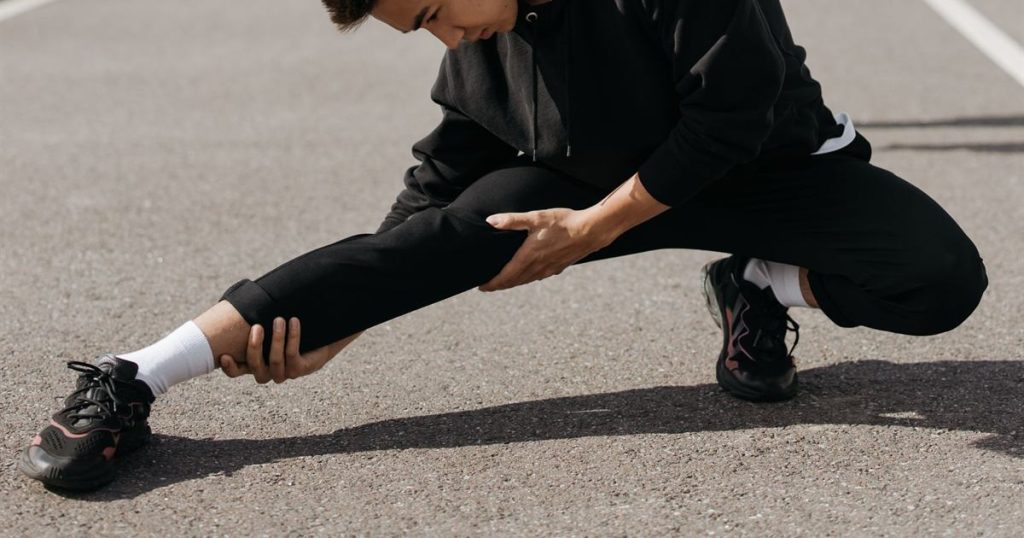
Your hamstring goes in March. You rest it, it settles, you return, and it goes again in September.
Recurring injury in the same tissue usually means the tissue was never the whole problem. A restricted hip or a stiff mid-back changes how load distributes, and the hamstring takes what the hip did not.
Chiropractic care for athletes targets that upstream restriction. This guide covers what treatment involves, the injuries that respond well, how to judge training through pain, and where young athletes need a different approach.
Why Athletes Use Chiropractic Care
The benefits of chiropractic care for athletes come down to how force moves through a body under load.
Sport asks joints to work near the end of their range repeatedly. A joint that has lost part of its range does not simply do less. The joints above and below compensate, and compensation concentrates load somewhere it was not designed for.
Three things treatment targets.
Restoring joint range so the movement pattern loads the tissue built for it.
Reducing recovery time between sessions by addressing the restriction and tension that accumulate through a training block.
Identifying the upstream cause of a recurring injury rather than treating the site of pain repeatedly.
Athletes and chiropractic care fit well since athletes notice small changes. A runner knows their stride felt different three weeks before the injury arrived.
Common Sports Injuries That Respond
Chiropractic care for sports injuries works best on mechanical problems, and less well on acute tissue tears.
Injury
What treatment targets
Recurring hamstring strain
Hip and pelvis restriction, lumbar mobility
IT band pain
Hip mechanics, glute function, foot loading
Shoulder impingement
Thoracic spine mobility, scapular control
Shin splints
Foot and ankle mechanics, load progression
Low back pain in rotation sports
Hip rotation range, thoracic mobility
Acute injuries need a different sequence. A fresh grade two tear is managed, then rehabilitated, then assessed for the mechanical cause. Treating the mechanics first, mid-tear, does not help.
Sports injury chiropractic care usually runs alongside physical therapy. Adjustment restores the range; loading rebuilds capacity within it. Skipping the second half is why injuries recur.
Running and Chiropractic Care
Running is repetitive loading with almost no variety, so small mechanical faults accumulate faster than in mixed sports.
A runner striking the ground thousands of times per session applies the same asymmetry thousands of times. A hip that rotates slightly less on one side produces a measurable difference in load through the opposite knee.
Running and chiropractic care come up together most often for IT band pain, patellar tendinopathy, shin splints, and plantar fasciitis. All four are load distribution problems rather than local tissue failures.
Aubrey Martin, D.P.T. at Caron works in particular with runners, which matters. Gait analysis and load progression are their own skill set beyond general treatment.
Volume increases cause more running injuries than mechanics do. Assessment should always ask what changed in your training before it asks what is wrong with your body.
Training Through Pain, and When to Stop
Athletes need a rule that is more useful than “listen to your body.”
Usually acceptable to continue, with monitoring. Discomfort that eases within the first 10 minutes of activity, stays below roughly 3 out of 10, and does not worsen the following morning.
Modify. Pain that stays constant through a session, or is worse the next morning. Reduce volume or change the activity rather than stopping entirely.
Stop and get assessed. Sharp pain, pain that changes your movement pattern, any swelling, night pain, or numbness and tingling.
The morning-after test is the most reliable of these. Pain that is worse 24 hours later means the tissue took more than it could handle, whatever it felt like at the time.
Altering your movement to avoid pain is the most damaging option. That is how one injury becomes three.
Recovery Between Sessions
Treatment sits alongside recovery, not in place of it.
Sleep does more for tissue recovery than any treatment available. Athletes cutting sleep to fit training in are undermining the training.
Load management matters more than any single recovery method. Sudden increases in volume or intensity cause a substantial share of overuse injuries, and gradual progression prevents more injuries than any treatment resolves.
Massage therapy helps with tissue tension and recovery between hard sessions. Ashton Johnson, C.M.T. at Caron works in sports massage in particular, which differs from general relaxation work in both intent and technique.
Timing around competition matters. Heavy soft tissue work the day before an event is a common mistake. Keep intensive treatment away from competition days except where your provider advises otherwise.
Young Athletes and Growing Bodies
Growing athletes are not small adults, and specialization has made this more relevant.
Growth plates remain open until skeletal maturity and are weaker than the surrounding tendon. Load that would strain an adult tendon can affect the growth plate instead, which is why conditions such as Osgood-Schlatter appear in adolescence and not in adults.
Single-sport specialization concentrates the same loading pattern year-round. Multi-sport participation and genuine off-seasons are protective, and sports medicine bodies including the American Academy of Orthopaedic Surgeons publish guidance on youth overuse injury worth reading.
Treatment for young athletes uses lower force and gives more weight to load management. Persistent pain in a growing athlete needs assessment rather than a wait-and-see approach.
FAQs About Chiropractic Care for Athletes
How does chiropractic care help athletic performance? Treatment addresses joint restriction that limits movement range and alters load distribution. Restoring range lets the movement pattern load the tissue designed for it. Claims that adjustment directly improves speed or strength are not well supported, and the honest benefit is mechanical rather than performance-enhancing.
How often should an athlete get treated? It depends on training load and whether you are treating a problem or maintaining. Active injury usually means higher frequency early, tapering as it resolves. In-season maintenance for a heavy training block is typically less frequent. Your provider should reduce frequency as you improve.
Should I get treated before or after competition? Usually after, or several days before. Heavy soft tissue work immediately before an event can leave you feeling loose in a way that affects performance. Light mobility work before competing is usually fine. Discuss timing with your provider around your calendar.
Can chiropractic care prevent sports injuries? It can address mechanical restrictions that contribute to injury risk, which is not the same as prevention. Load management, sleep, and training progression influence injury rates more than any treatment. Treatment is one part of a wider picture rather than a shield.
Is chiropractic care safe for teenage athletes? Treatment adapted for skeletal maturity, using lower force, is widely used in young athletes. Growth plates change what is appropriate, so a provider should ask about growth, sport, and training volume. Persistent pain in a young athlete warrants assessment rather than waiting for it to pass.
Get Your Recurring Injury Assessed
The same injury twice in a year is information. An assessment identifies what upstream restriction keeps loading that tissue.
Caron Chiropractic provides chiropractic care in St. Paul, rated 4.9 stars across 385 Google reviews.
Book My Sports Assessment or call (651) 255-9999.
Reviewed by Corey McFarlane, D.C., Northwestern Health Sciences University, 2014, with continuing education in sports conditions and rehabilitation.This article is general information, not medical advice.